|
||||
 |
||||
| '... The telematic vision
belongs to everyone'. |
||||
|
||||
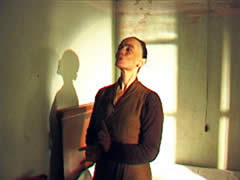
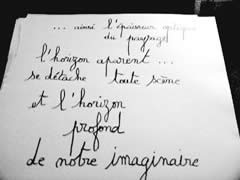
| Skene: stone. The word scene originates from the Greek skene: stone. Archaically skene referes to the stone used as the background for the grec hystrio, player. Thus we talk of the stone skene as a first environment for the performer. Tele: at or over a distance. The telematic vision belongs to everyone. From the hunting rituals of the Inuits, to the mystics during their visionary trances, to contemporary Internet webcams which allow us to see animals in their reservations, a city office, the Montblanc mountain or couples performing sexual intercourse. Electronic and digital technology is perceived in terms of implosion and disembodiment: the primacy of 'being digital', the primacy of speed absolute above all other values. This critique is elaborated to its extremity by Paul Virilio, whose thesis is the incapacity of experiencing duration in the extensive void of speed which projects the technologies of telematic transmission. The confrontation for TEATRE VIRTUAL: Can the art of the actor challenge the dilemma of this disincarnation and the change in the new systems of access and communication? How does the memory of the skene actualise in the act of telematic communication? For Virilio there is the optical density of the landscape the apparent horizon of all scene and the deep horizon of our own collective imagination: a living present. |
||||
|
||||
Images recorded: 2 March 2001 © Dogon Efff Limited 2001 |
||||